War on Cash Update: New Escalation in the EU
As most of our clients and regular readers surely know, at BFI Bullion, we have been closely following and frequently writing about the developments in the ongoing and spreading war on cash. We see this issue as extremely important for all investors and savers, as it has the potential to forcibly remove the last remnants of control people still have over their own money. To be sure, fiat money is certainly vulnerable, corruptible and can by no means be relied upon for long-term value preservation. However, physical cash can at least offer some semblance of independence and privacy, as well as some protection from government overreach.
This article was taken from BFI Bullion’s recent newsletter, the Digger, published on December 18, 2025. To read the latest Digger in its entirety, click here.
It will probably come as no surprise to anyone that the most recent escalation in the war on cash once again came from the EU. As the European Parliament triumphantly announced, it has now “adopted a package of laws strengthening the EU’s toolkit to fight money-laundering and terrorist financing.” The most controversial part of the new Anti-Money Laundering package dictates that all business transactions over €10,000 in cash will be illegal, across the bloc, starting July 2027. National governments will still be able to set their own caps for sums below the EU-wide threshold, meaning that the limitations could be even stricter going forward in some member states.
There are, in fact, already cases where cash transactions are subject to stricter regulations than the forthcoming EU limit, a limit which applies solely to business payments. In Italy, for example, cash transactions have been limited to just €5000, but this also includes payments between private persons as well. What’s more, as the European Parliament also announced, “to supervise the new rules on combatting money laundering, a new authority - the Authority for Anti-Money Laundering and Countering the Financing of Terrorism (AMLA) - will be established in Frankfurt”, adding yet another layer of bureaucracy and additional burdens for taxpayers.
What is even more interesting, however, is that even though the new €10,000 cash limit was widely reported, some much more newsworthy fine-print provisions in the legislation were not. While transactions over that threshold will be banned, it doesn't mean that cash payments under that limit will be totally unaffected. On the contrary, any cash payments between €3,000 and €10,000 will trigger mandatory identity verification requirements. This means that citizens that wish to transfer even these much smaller amounts will be stripped of all privacy and anonymity that cash is expected to provide.
The trend is clear and it has been for years. Bit by bit, cash is becoming purposefully extinct in the EU, under the guise of defending against money launderers, terrorists, and evildoers of all kinds. The problem is that it is not the evildoers that are actually being punished. After all, real life criminals are notorious for finding ways to bypass legal obstacles, which is why they are criminals to begin with. Instead, it is ordinary, law-abiding citizens bearing the brunt of all these regulations and having their rights trampled upon.
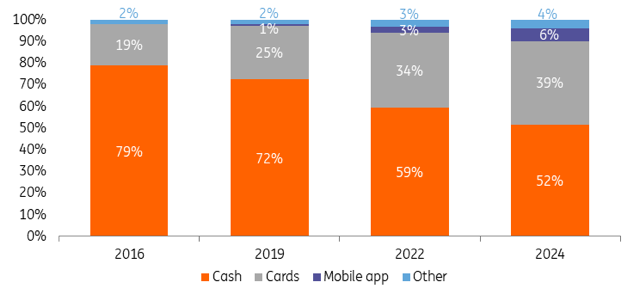
The burden of proof is being absurdly reversed, as policy makers are asking individuals to prove their innocence before they can engage in normal everyday activities and transactions using their own hard-earned money. After having successfully limited the free use of cash to €3,000, very little stands in the regulators’ way of reducing it even further, perhaps until cash becomes entirely unusable and all economic activity is forced onto digital avenues.
This could be the last piece of the puzzle that EU lawmakers need to fall into place before the introduction of the CBDC, or “digital Euro”, that is already in development. After all, the only way to ensure widespread adoption of any state-issued and -controlled digital currency is to eliminate cash, as that would be the first place that dissenting or skeptical citizens would resort to in order to avoid the extreme control and monitoring that a CBDC would entail. That means that the only remaining haven that can still protect individuals for government trespasses and central control is physical precious metals, especially when stored outside the banking system and in a safe and legally predictable jurisdiction.
Read the entire BFI Bullion Digger here.